From our blog
How to protect steel water tanks from corrosion in a coastal climate
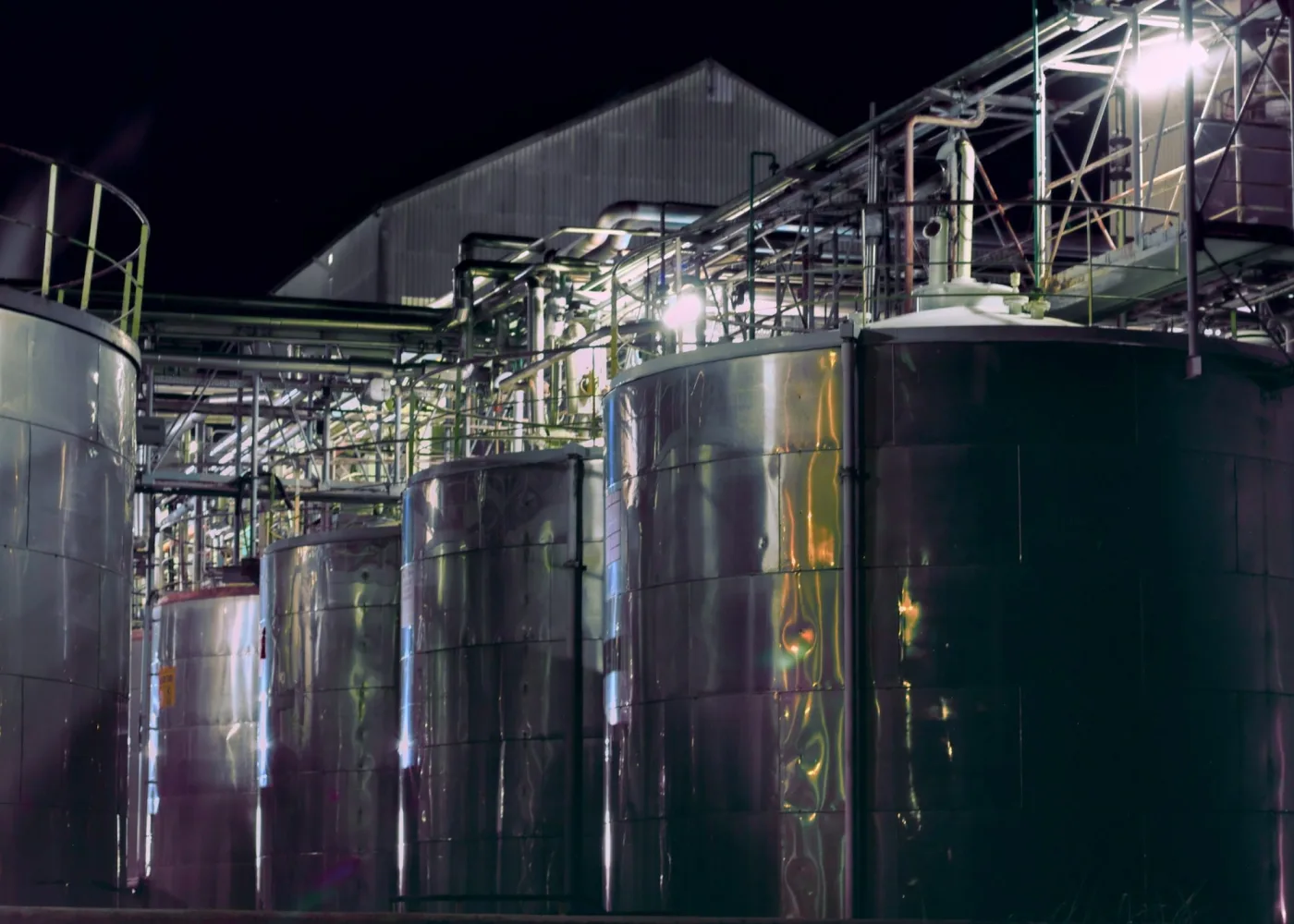
High humidity and airborne salt in Jeddah and other coastal cities make one of the most corrosive environments for steel — usually category C5 under ISO 12944. A poorly protected tank can lose significant wall thickness within a few years. These are the steps we follow to stretch a tank’s life to decades.
1. Protection starts at the design stage
- Continuous instead of stitch welds, so there are no crevices where water collects.
- A sloped bottom and a full drain point so no water stands inside.
- Rounded edges and removed weld spatter, because coating is always thinnest on sharp edges.
- A corrosion allowance per API 650, typically 1.5–3 mm depending on service.
2. Surface preparation: half the coating’s success
Poor surface preparation is the most common reason coatings fail. We abrasive-blast the steel to Sa 2½ per ISO 8501-1 with a 50–75 µm profile, and measure soluble salts before painting, because chloride residue causes the coating to blister later.
3. Internal lining for drinking water
We use epoxy systems approved for potable-water contact (such as NSF/ANSI 61 or equivalent), in two or three coats to a total dry film of 300–400 µm. After curing, the lining is holiday-tested to make sure there is no exposed spot.
4. External coating against sun and salt
A typical coastal system: zinc-rich primer, an epoxy intermediate coat and a UV-resistant polyurethane topcoat. Small and medium tanks can also be hot-dip galvanised.
5. Cathodic protection
On large or partly buried tanks, sacrificial anodes (zinc or aluminium) or impressed-current systems add a second line of defence wherever the coating is damaged.
6. Regular inspection
- A yearly visual check of the external coating, welds and foundations.
- Ultrasonic wall-thickness readings every 3–5 years.
- Draining and inspecting the internal lining as the manufacturer recommends, and repairing local damage early.
At Metal Fabrication Workshop Co. we design and build water and fuel tanks to API 650, blast and coat them in our workshop before shipping, and hand over each tank with a coating-thickness report and leak-test record. Request a quote for your next tank.
Have a drawing?
Send us your drawings and quantities and get a clear quote fast.